
2026-08-31 ·
AC Refrigerant Leak in California: Warning Signs and Repair Options
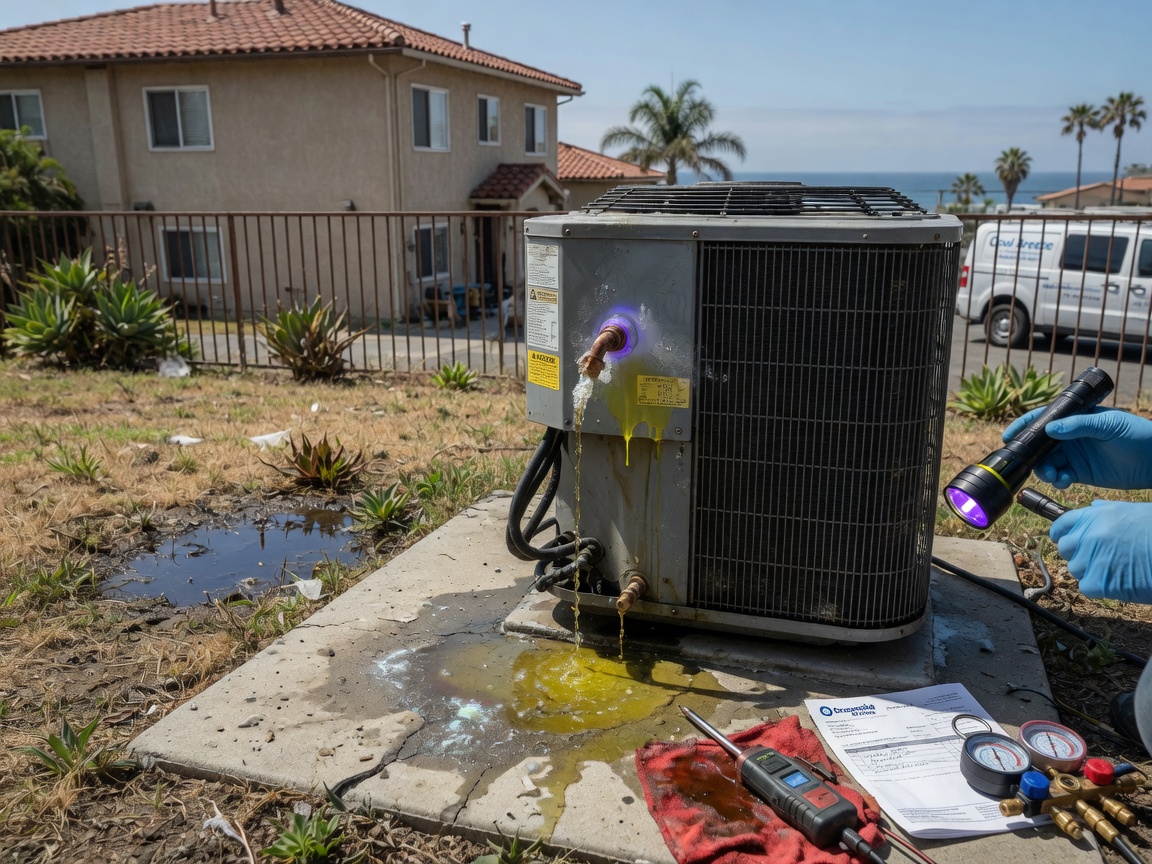
An AC refrigerant leak in Oceanside often reveals itself through reduced cooling output and visible ice on the evaporator coil, with repair options ranging from simple leak sealing to full component replacement depending on the damage extent. Homeowners in Downtown Oceanside and South Oceanside frequently encounter these problems in systems installed 15 to 25 years ago when coastal humidity and salt air accelerate corrosion on copper lines. The mild Mediterranean climate with cool foggy summers means units cycle less aggressively than inland areas like Vista or San Marcos, yet leaks still develop from vibration, age, and poor maintenance near the Oceanside Pier or Mission San Luis Rey neighborhoods.
Warning Signs of Refrigerant Leaks
Homeowners notice hissing sounds near the outdoor unit or indoor air handler first, followed by warm air blowing from vents even when the thermostat calls for cooling. Ice forming on the suction line or evaporator coil during operation points directly to low refrigerant levels caused by a breach. Another common indicator appears when the system runs continuously without reaching the set temperature, especially in East Oceanside homes where older ductwork allows uneven airflow. Water pooling around the indoor unit can signal a frozen coil melting after shutdown. These signs appear more often in units serving single-story ranch homes common along Oceanside Harbor because the salt-laden air corrodes fittings faster than in drier inland spots.
How Local Conditions Influence Leaks
San Diego County's coastal environment brings persistent moisture and salt spray that pits aluminum fins and copper tubing over time, particularly in homes built before 2000 around the Oceanside Pier. The cool foggy summers reduce overall runtime compared to hotter areas like Carlsbad, yet the constant humidity promotes corrosion at flare connections and Schrader valves. Terrain near the harbor exposes units to wind-driven moisture that accelerates wear on outdoor coils. In contrast, systems in newer East Oceanside developments experience fewer leaks because they often use factory-sealed joints less prone to vibration damage from nearby rail lines. These factors require techs to pressure-test lines thoroughly rather than relying on visual inspection alone.
Repair Options for Oceanside Homes
Technicians start with an electronic leak detector and nitrogen pressure test to locate the breach before deciding between brazing a small hole or replacing the entire line set. Minor leaks at accessible fittings can often be repaired on site with new O-rings and proper evacuation to 500 microns. Larger leaks in the evaporator coil usually require coil replacement or full system retrofit, especially when R-22 refrigerant is involved and conversion to R-410A becomes necessary. AC Repair Services handle these diagnostics daily across South Oceanside and Camp Pendleton-adjacent neighborhoods. For after-hours discovery of a leak that leaves a home without cooling, Emergency Air Conditioner Repair provides same-day response. In cases where the compressor has already been damaged by low refrigerant, the AC Compressor Replacement Cost: California Price Guide for Homeowners outlines realistic next steps.
Preventing Recurrence After Repair
After sealing a leak, adding dye to the system allows future checks during routine visits. Scheduling seasonal inspections helps catch vibration-induced cracks before they release refrigerant, particularly important for units exposed to harbor winds. Homeowners in Oceanside can request line-set insulation upgrades to reduce condensation and corrosion at joints. Keeping the outdoor coil clean of salt residue also extends component life. AC Fix operates Mon–Sat 7am–10pm and Sun 8am–9pm to accommodate these maintenance needs without disrupting daily routines in the area.